Punta Cana Cenote Buggy and ATV Tours
You wake up at your resort thinking you are going for a gentle morning drive through palm groves. Within twenty minutes of leaving the ranch base, you will have orange mud plastered across your forehead, fine grit grinding between your molars, and exhaust fumes clinging to your shirt. Taking a cenote punta cana buggy adventure is by far the filthiest excursion on the east coast of the Dominican Republic. It is chaotic, noisy, and hot. Yet jumping into a freezing, crystal subterranean pool to rinse off that thick clay is one of those travel memories that sticks with you for years.
Almost every tour desk between Uvero Alto and Cap Cana sells some variation of this trip. You will see flyers calling them cenote boogies punta cana runs, quad safaris, or backcountry cave trails. They all share a similar DNA: roaring engines, rural dirt tracks, a commercial tasting stop, and a swim in a limestone sinkhole. Still, the experience can swing wildly from an overcrowded tourist trap to an exhilarating blast through the Dominican wilderness. Knowing how these tours run, what machinery to pick, and what to expect underground makes the difference between a miserable slog and the highlight of your vacation.
Book your cenote Punta Cana experience:
What Actually Happens on a Cenote Tour Punta Cana Excursion
Tours start with an open-air safari truck picking you up from your lobby. If you are staying in Bavaro, expect a bumpy 25-minute ride out to the staging depots clustered around Macao or El Salado. You arrive at an open-sided tin-roof ranch surrounded by dozens of idling engines. Guides herd people into groups by language, hand out scratched helmets, and give a ninety-second safety speech that boils down to two rules: stay in line and do not crash into the guide. Then you fire up your engine, and the convoy rolls out into the dust.
The driving itself happens on unpaved access roads, old quarry paths, and dirt trails cutting through low tropical scrub. When it has rained recently, the potholes turn into muddy ponds. Drivers hit these water hazards at 30 km/h, sending walls of muddy water straight into the open-sided buggies. If the weather has been bone dry for a week, you will eat chalky white dust instead. Either way, you will not stay clean.
Most itineraries follow a strict three-stop loop before heading back to home base:
- Macao Beach stop: a quick twenty-minute pause on the sand to look at the surf, stretch your legs, and dodge aggressive local vendors selling braided bracelets or wooden turtles.
- The typical Dominican house: an open shed where staff demonstrate how cacao beans, raw tobacco, and coffee beans are processed, followed by samples of spiced mamajuana liquor and a polite nudge to buy souvenirs.
- The cave cenote: the main event, where you kill your engine, hike down into a shaded cavern, and plunge into cold freshwater to strip the road grime off your skin.
The pacing often feels rushed. Guides work on tight schedules because the ranches run two or three shifts every day, usually at 8:00 AM, 11:00 AM, and 2:00 PM. You rarely spend more than thirty minutes at the water. Even so, dropping out of the blazing midday sun into a quiet, shadowed cave feels incredible.
Pro tip: Pick the 8:00 AM departure if your hotel offers it; the trails are cooler, the water in the cave is clear before dozens of tours stir up sediment, and you get back before the heavy afternoon heat sets in.
ATV vs Dune Buggy: Which Machine Should You Pick?
When booking an atv cenote tour punta cana operators will ask you to choose between two completely different types of vehicles. Neither is inherently better, but your choice will dictate your comfort level for the next three hours.
Single-rider ATVs, or four-wheelers, sit you up high on a saddle like a motorcycle. You steer with handlebars and use a thumb throttle. They offer far better maneuverability than buggies, allowing you to skirt around the worst bone-jarring ruts or straddle deep puddles if you want to avoid getting drenched. The downside is physical effort. Steering an unassisted quad across coral limestone and loose gravel will work your forearms and shoulders hard. By mile ten, your wrists will feel the vibration.
Dune buggies sit low to the ground with a roll cage, car-style steering wheel, and pedals. They come in two-seater and four-seater configurations. Because your seat rests only a foot above the mud, buggies offer zero splash protection. The tires fling dirt directly inward through the open sides and wire mesh doors. Buggies are easier for non-riders, teenagers, and couples who want to sit side-by-side, but they break down more often than ATVs. The rental fleet vehicles in Punta Cana take a brutal beating daily, and it is common for a buggy belt to snap or an engine to stall mid-convoy.
| Vehicle Type | Average Cost (USD) | Mess Factor | Handling & Terrain | Best Suited For |
|---|---|---|---|---|
| Single Quad / ATV | $55 - $75 | Moderate | Agile, responsive, rough on the wrists | Solo travelers, confident drivers |
| Double Dune Buggy | $70 - $95 (for two) | Severe | Low clearance, heavy steering, sluggish | Couples, friends sharing driving duties |
| Family 4-Seater Buggy | $120 - $160 (total) | Severe | Heavy, slow acceleration, wide turns | Parents traveling with younger children |
If you are traveling as a couple, I think taking two separate single quads is often more fun than sharing a double buggy. The passenger in a two-seater buggy usually spends the whole ride eating the driver's dust, clutching a rusty roll bar, and praying they do not hit the next ditch sideways.

The Caves You Actually Visit on a Punta Cana Cenote Excursion
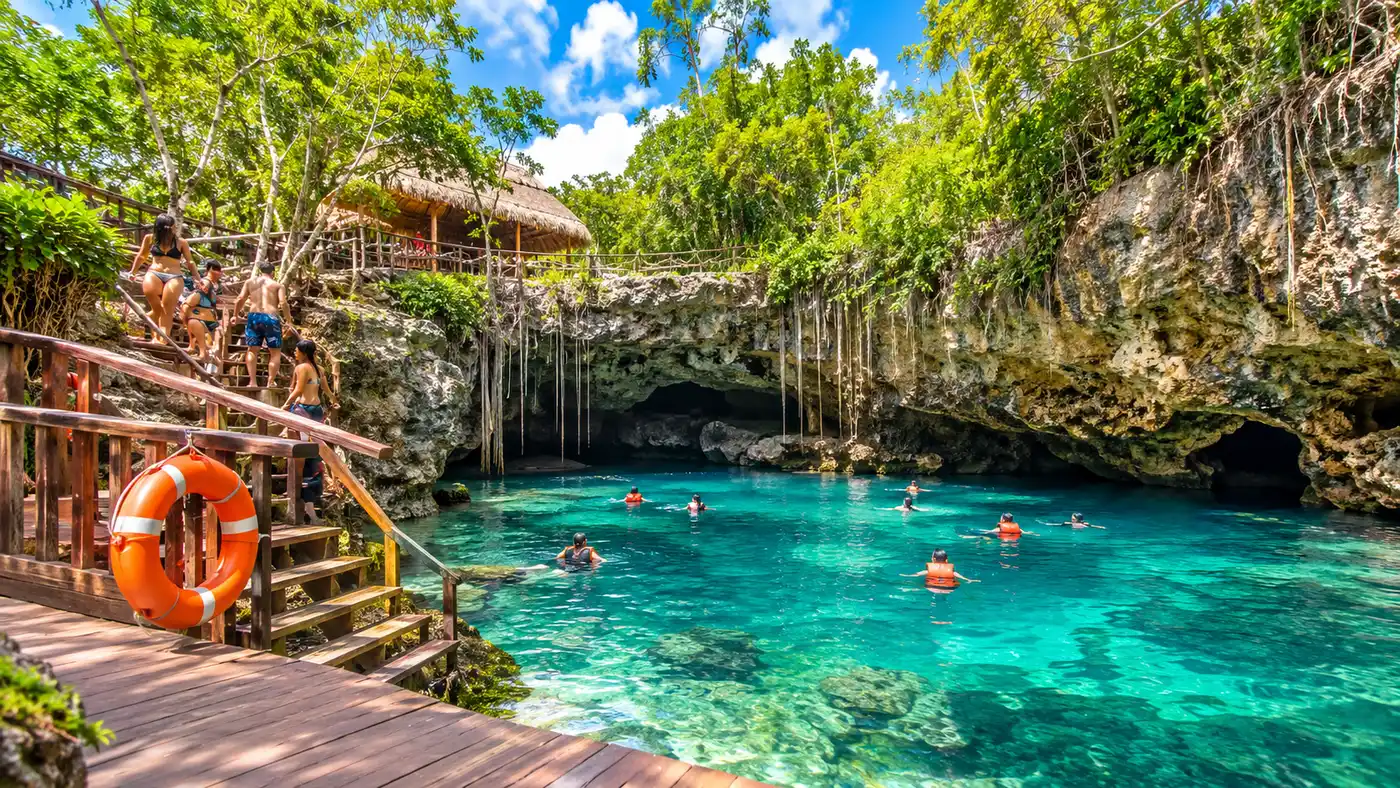
Marketing brochures often show massive, sun-drenched sinkholes with tropical hanging vines. The reality of a standard cenote punta cana excursion is quite different. The vast majority of buggy tours do not visit open-sky lagoons like Cenote Hoyo Claro or the cliff-walled pool at Scape Park. Instead, they head to enclosed subterranean caverns, primarily around Cueva Taina near Macao.
You park the buggies in a dirt lot and walk down uneven stone steps carved directly into the limestone rock. As you descend, the temperature drops instantly by ten degrees. The air smells damp, like wet clay and cool stone. Local workers usually rig up low-voltage string lights along the ceiling to illuminate the pathway and the pool below, casting strange shadows across stalactites hanging over the water.
The water inside these caverns is fresh, filtered rainwater that has percolated through porous limestone for miles. It sits around 72 degrees Fahrenheit. After baking under the Caribbean sun in an open vehicle, jumping in feels like an electric shock to your nervous system. It takes your breath away for two seconds, then feels glorious. The depth in these swimming caverns usually runs anywhere from 8 to 20 feet, with rocky shelves along the perimeter where you can rest your feet.
Note: Most buggy cave sites drop off immediately into deep water without shallow walk-in zones, so grab a life jacket from the entrance rack if you are traveling with kids or are not a strong swimmer.
These subterranean formations share the same geological origins as other famous cave cenotes in Punta Cana, formed over thousands of years as underground river systems dissolved the limestone bedrock until roof sections collapsed. Just manage your expectations regarding solitude. On a busy Tuesday morning, there might be forty people splashing in the same dark pool at once. You will not have a quiet spiritual communion with nature, but floating on your back while staring up at a jagged cave ceiling is fantastic all the same.
Book your cenote Punta Cana experience:
What to Wear and What to Bring (Unless You Love Ruined Clothes)
Do not wear anything you care about. That white designer linen shirt you bought for resort dinners? Leave it in the closet. The red mud around Macao contains iron minerals that dye cotton fibers permanently. Even three cycles through the resort laundry service will leave your shirts with a faint rust tint.
Pack a beat-up gym bag with these exact essentials:
- Old dark clothing: wear a dark polyester t-shirt and swim trunks or athletic shorts that dry fast and can handle permanent stains.
- Secure footwear: water shoes or beat-up sneakers work best; flip-flops will fly off your feet in the mud or slip dangerously on the slick cave steps.
- Eye protection: cheap wraparound sunglasses are mandatory to keep flying sand, mud clumps, and engine fumes out of your eyes during high-speed stretches.
- Bandana or neck gaiter: you must cover your nose and mouth when riding behind another vehicle, or you will cough up road dust for the rest of the evening.
- Small cash bills: bring $30 to $40 in small US dollars or Dominican pesos for cold drinks, locker rentals, and tips for the trail mechanics.
Leave heavy backpacks, passports, and expensive jewelry locked in your hotel safe. You will bounce around violently, and things fly out of unzipped pockets constantly. Mechanics at the depots have boxes full of lost car keys, single sandals, and cracked iPhone screens recovered from the trail mud over the years.
Bring a waterproof phone pouch on a lanyard if you want cave photos. Better yet, use an action camera with a sturdy wrist mount. Taking your hands off the steering wheel to snap a photo while driving a buggy through rutted coral stone usually ends with a dropped phone or a clipped palm tree.

Dodging Pitfalls: Vendors, Mud, and Hidden Costs
The business model of budget excursions in the Dominican Republic relies heavily on upsells. The low upfront price you paid online or at your hotel desk only covers the seat and the gas. Once you arrive at the ranch, the monetization machine kicks into gear.
The first sales pitch hits before your engine even starts. Photographers will snap your picture wearing a helmet, then trail your convoy on fast dirt bikes all morning, popping out of bushes to take action shots as you blast through mud puddles. By the end of the run, they will offer you a photo thumb drive for $40 to $70. You can negotiate this down, especially if you have cash in hand. If you do not want it, a polite, firm shake of the head is all it takes.
Be prepared for the commercial interlude at the typical Dominican house. The staff there give genuine, engaging explanations about native plants, coffee roasting, and vanilla, but the venue is ultimately a gift shop. The prices for cigars, coffee beans, and artisanal rum are often double what you would pay at a regular Dominican supermarket like Super Pola or Jumbo in downtown Bavaro. Enjoy the free samples of mamajuana, tip the demonstrator a dollar or two, and save your serious souvenir shopping for town.
Tipping the guides is standard practice. These guys work in blistering heat, breathe exhaust all day, and spend their breaks hauling stalled buggies out of deep trenches. Giving five to ten dollars per vehicle to the mechanical crew and lead guide at the end of the run goes a long way toward supporting the locals who keep these trails open.
Frequently Asked Questions about cenote punta cana buggy
Do I need a driver's license to drive a buggy or ATV in Punta Cana?
Most tour companies require the primary driver to be at least 18 years old and possess a valid driver's license from their home country. While guides rarely inspect the physical card at the rural ranches, you must sign a liability waiver confirming you know how to operate a motor vehicle.
Can children ride along on the cenote buggy tours?
Yes, children can join as passengers in double buggies or four-seater family buggies, usually starting at age 4 or 5. Kids cannot drive the machines, and children under 16 are typically barred from operating single ATVs due to safety regulations.
How deep is the water in the cave cenote?
Water depth in the cavern pools usually ranges from 6 to 18 feet depending on recent rainfall. There are very few shallow wading spots once you step off the wooden platforms, so anyone who is uncomfortable swimming in deep, dark water should wear a life jacket.
Will I really get that dirty on the tour?
Yes. Unless you visit during a long dry spell, expect mud on your face, in your hair, and across your clothes. The buggies lack windshields and body panels, meaning the knobby tires throw mud directly into the cabin throughout the drive.
Quick Reference
- Tour duration: about 3.5 to 4 hours including transfers
- Water temperature: roughly 72°F (22°C) year-round
- Average speed: 15 to 30 km/h along dirt tracks
- Mandatory gear: bandana, sunglasses, old clothes
Book your cenote Punta Cana experience:
Is It Worth It?
If you want a peaceful, polished nature walk through pristine tropical ecosystems, a buggy tour will probably drive you crazy. It is loud, unapologetically commercialized, and rough on your spine. But if you accept the chaos for what it is, strap on a bandana, and do not mind swallowing a speck of dirt, tearing through backwoods trails on a rattling machine is ridiculous fun. That sudden transition from roaring trail dust to floating in cold, silent, underground spring water is an experience unique to this rugged corner of the island. Pack your oldest t-shirt, bring a handful of small bills, and go get filthy.
Read more about cenote Punta Cana.